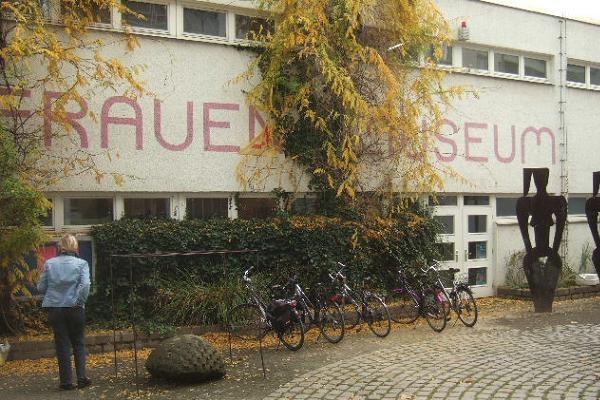
Womens Museum Bonn
Marianne Pitzen is a self-effacing artist who found a need and filled it. Born in Stuttgart on 29 May 1948, she held her first official art gallery exhibit just 21 years later. Obviously, Pitzen...
Marianne Pitzen is a self-effacing artist who found a need and filled it. Born in Stuttgart on 29 May 1948, she held her first official art gallery exhibit just 21 years later. Obviously, Pitzen wastes no time getting done what needs to be done.
The need she found in the late '70s was a lack of female influence in the art world. Her solution was the founding of the Bonn Women's Museum - which now addresses not only the need for more female influence in art but also numerous feminist issues touching on the emotional, psychological, spiritual, physical, social, and educational oppression of women.
How was the Bonn Women's Museum founded?
In 1981, artists and architects collaborated to create a place for women's art and women's history in a vacant department store in Bonn's old town. "Actually, we intended that it should be a museum only for that summer," said Pitzen. The Bonn city council had agreed. But rather than withdraw from the building several months later as planned, they stayed.
It was the world's first squatters' museum. "We could not immediately tell the city what we had planned," Pitzen later confirmed.
Did the city try to close it?
Yes. In 2014, Die Welt reported that the Bonn city council pushed for its closure by 2019, despite Pitzen winning a 3,000-euro prize from the Foundation of Obstreperous Women and the political support of Ute Schafer, then-Minister for Family, Children, Youth, Culture, and Sport of North Rhine-Westphalia.
It took three years for the city to capitulate. Pitzen is now director of the officially recognised Bonn Women's Museum and continues to fight the good fight.
What exhibitions does the museum show?
Since its founding, the museum has sponsored more than 500 thematic exhibitions. It prefers temporary exhibits to keep its messages fresh and relevant. One notable exhibition spotlighted by Die Welt in 2014 addressed the plight of single mothers and the shabby treatment of single-parent families (20% of German families) by federal and state legislators.
"Making women's problems visible is one of our most important tasks," said Pitzen.
The collection includes works from legendary female artists like Kathe Kollwitz, Katharina Sieverding, Valie Export, Maria Lassnig, and Yoko Ono. There's a library and archive focusing on feminism, feminist politics, and post-WWII art. The museum's advisors have helped establish similar museums worldwide, including Berlin's Frauenmuseum.
| Detail | Info |
|---|---|
| Address | Im Krausfeld 10, 53111 Bonn |
| Phone | +49 228 691344 |
| Website | frauenmuseum.de |
| Hours | Tue-Sat 14:00-18:00, Sun 11:00-18:00. Closed Mon. |
| Adults | 6 euros |
| Concessions/Groups | 4.50 euros |
| Students | 3 euros |
Don't merely visit this museum. Start your own in your city.
Frequently Asked Questions
Where is the Women's Museum in Bonn?
At Im Krausfeld 10, 53111 Bonn. It's open Tuesday through Saturday from 14:00-18:00 and Sundays from 11:00-18:00. Closed Mondays.
Who founded the Bonn Women's Museum?
Artist Marianne Pitzen founded it in 1981 by occupying a vacant department store in Bonn's old town. It was meant to last one summer. It's still there.
What artists are shown at the Frauenmuseum?
The collection includes works by Kathe Kollwitz, Katharina Sieverding, Valie Export, Maria Lassnig, and Yoko Ono, among others. The museum has hosted over 500 thematic exhibitions since 1981.