The Most Spoken Languages in Germany
German is the official language of Germany. This is true and also incomplete. Step into any major German city and the linguistic reality is considerably more layered. Turkish is spoken by approximatel...
What People Actually Speak in Germany
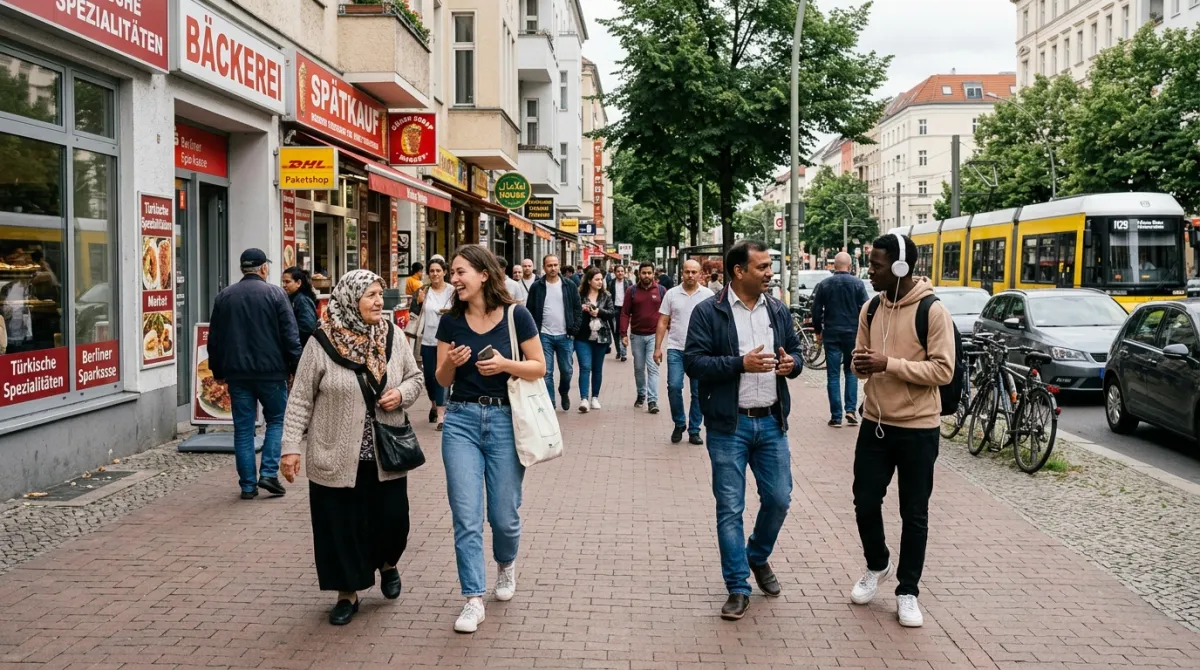
German is the official language of Germany. This is true and also incomplete. Step into any major German city and the linguistic reality is considerably more layered. Turkish is spoken by approximately 1.5 million people in Germany. Arabic, Russian, Polish, Kurdish, Romanian, Vietnamese, and dozens of other languages have significant communities. Berlin alone has over 180 first languages spoken within its borders. Germany is, in practice, a multilingual country that maintains a monolingual official identity.
German as a Pluricentric Language
Standard German - the written and formal spoken form - is shared across Germany, Austria, Switzerland, Liechtenstein, Luxembourg, and parts of northern Italy and Belgium. But "shared" is doing heavy lifting there. Austrian Standard German differs from German Standard German in vocabulary, pronunciation, and some grammar. Swiss Standard German differs further - Swiss speakers of German also have their own dialect layer (Schweizerdeutsch) that is distinct enough to require subtitles when broadcast on German television.
These are not regional accents. They are recognized national varieties of the same language, with their own dictionaries, style guides, and institutional support. The Duden, Germany's authoritative dictionary, lists Austrian and Swiss variants explicitly.
Regional Languages
Low German (Niederdeutsch or Plattdeutsch) is recognized as a regional language under the European Charter for Regional or Minority Languages. It was the dominant language of northern Germany and Scandinavia in the medieval period and is still spoken by perhaps 2 million people, mostly in the north. It is different enough from standard German that it is sometimes classified as a separate language rather than a dialect.
Sorbian - a Slavic language - is spoken by approximately 60,000 people in the eastern states of Saxony and Brandenburg. It is protected by law and taught in schools in its communities. Frisian is spoken by a small community in Schleswig-Holstein. Danish has speakers in northern Schleswig-Holstein near the Danish border.
The Role of English
English proficiency in Germany is high by European standards - surveys consistently show 55-65% of Germans can hold a conversation in English. In urban professional environments, the number is higher. In rural areas and among older generations, considerably lower. German learners often encounter the phenomenon of native speakers switching to English as soon as they detect a foreign accent. This is helpfulness, not hostility, but it can hinder practice. The solution is simple: ask them to continue in German. Almost all will comply immediately.