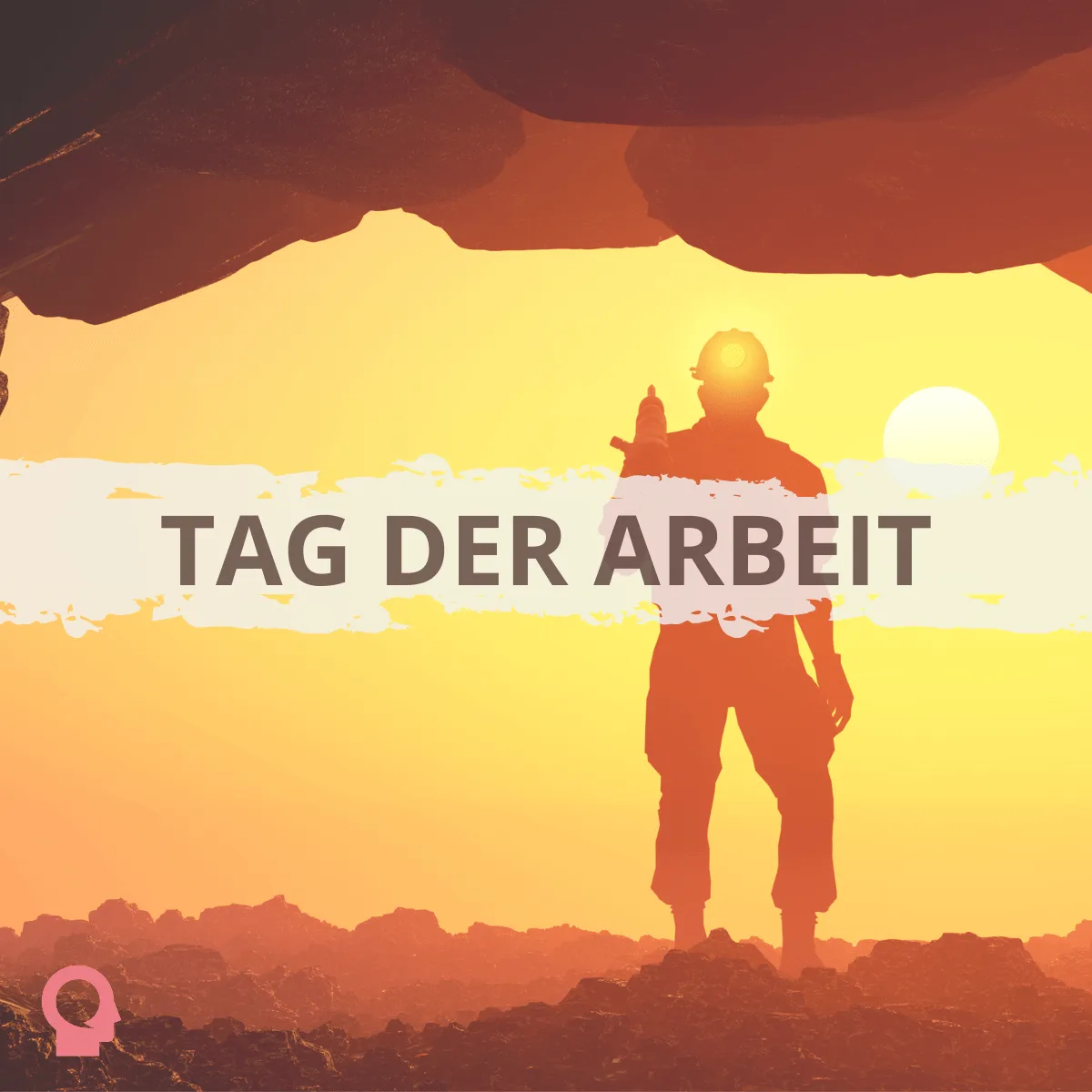
Tag Der Arbeit
The first of May in German is called Tag der Arbeit - "day of work." Ironically, it's one of those days when Germans don't have to go to work.
The first of May in German is called Tag der Arbeit - "day of work." Ironically, it's one of those days when Germans don't have to go to work.
Germany has a very particular relationship with this day. There's a particular history. There are particular expectations. And there are certainly divided opinions among the Germans I know regarding the day.
What does Tag der Arbeit mean?
Tag der Arbeit literally means "Day of Work" - Germany's name for May Day, the international workers' holiday. It's a public holiday across all 16 German states. Shops close. Offices empty. And people either march, barbecue, or both.
The day has pre-Christian roots. Back in the Iron Age, May Day was a pagan fertility festival celebrating the coming of spring, often with a maypole that was danced around. Strong enough a custom to survive Christianisation.
What is Walpurgisnacht?
The night before May Day is Walpurgisnacht, named after an eighth-century English nun - Saint Walpurga - who is credited with dispelling witches and "evil spirits" from the Saxons. Think of it as an alt-Halloween, with bonfires and honey biscuits (Ankenschnitt) for hell hounds.
What happened on May Day in German history?
The modern May Day is about workers' rights. Maybe you could imagine "the witches" as "capitalists" and "fertility" as the birth of "socialism" if you wanted to make a tenuous link between the old and the new. But the real history is darker.
1889: The Ruhr miners' strike
In Bochum and Essen, miners clashed with police and 14 people died. I've seen one of the memorials in Essen. It's suitably sombre and rough-hewn - it looks like it was dug up from the ground itself. The miners failed to make any changes.
1929: Blutmai
The next major incident was in 1929, recently depicted in the TV drama Babylon Berlin. Demonstrations had been banned in Berlin due to the perceived threat of communist agitation. The KPD (Kommunistische Partei Deutschlands) ignored the ban. Thirty-three people were killed and around 1,200 arrested.
1933: The Nazis make it a holiday
It was the Nazi Party who first proclaimed May 1st a national holiday in Germany. Then they proceeded to suppress the German union movement. That's the kind of irony history doesn't let you forget.
| Year | Event | Location |
|---|---|---|
| 1889 | Miners' strike, 14 killed in police clashes | Bochum/Essen (Ruhr) |
| 1929 | Blutmai - 33 killed, 1,200 arrested | Berlin |
| 1933 | Nazis declare May 1st a national holiday | Germany-wide |
| 1987 | Kreuzberg riot, police retreat from SO36 | Berlin-Kreuzberg |
What happens on May 1st in Berlin Kreuzberg?
Kreuzberg has a very urban, sometimes grungy cosmopolitan feel. The German language shares space with numerous other languages here. Graffiti is celebrated everywhere as an art form, and some of it is quite brilliant. This is an iconic region of modern Berlin, and opinions among Germans are divided. It's either seen as an epicentre of social justice and activism or a rabble of malcontents out to cause havoc and vandalise property.
May Day 1987 is the big one. It started peacefully enough until some minor clashes with police snowballed into a riot so intense the police had to retreat out of the SO36 zone (a designation based on a Kreuzberg postal code). Cars were set on fire. Barricades went up.
That was the last time there were any major problems. While tensions do still get heated, many Berliners express more interest in the art and music of the event. May Day has become more recreational in the rest of Germany - less sombre solidarity, more barbecue.
Frequently Asked Questions
Is May 1st a public holiday in Germany?
Yes. Tag der Arbeit is a public holiday in all 16 German states. Shops and offices are closed. It's been a national holiday since 1933.
What does Tag der Arbeit mean in English?
It translates literally to "Day of Work" - the German name for May Day or Labour Day. The irony is that nobody works on this day.
Why is May 1st celebrated in Berlin?
Berlin has a long history of May Day demonstrations, especially in Kreuzberg. The 1987 riot became iconic. Today, the celebrations are a mix of political marches, street parties, and music - though tensions with police still occasionally flare up.
What is Walpurgisnacht?
Walpurgisnacht is the night before May Day (April 30th), named after Saint Walpurga. It has pagan roots as a night to ward off evil spirits, with bonfires and celebrations. Think of it as Germany's version of Halloween, but in spring.