Museum Bread Culture Ulm
Ulm, a city in Baden-Wurttemberg with a population of roughly 120,000, has many worthwhile cultural sights. One of the more unexpected and especially delightful ones is its Museum of Bread Culture...
Ulm, a city in Baden-Wurttemberg with a population of roughly 120,000, has many worthwhile cultural sights. One of the more unexpected and especially delightful ones is its Museum of Bread Culture on the northern edge of the Old City.
What is the Bread Museum in Ulm?
The Museum Brot und Kunst (Museum of Bread and Art) is the only museum of this kind in the world. It was established in 1955 by Willy Eiselen and his son Hermann Eiselen, who promoted the museum not only throughout Germany but also worldwide.
The Eiselen family provided supplies and equipment to the bakery trade and felt a strong allegiance to the craft they'd been part of for decades. The first permanent exhibition opened in 1960. The museum's one-millionth visitor came through in 2004, and it's now administered by the Eiselen Foundation.
In 1991, the museum moved into the Salzstadel, a historic storehouse in the centre of Ulm. It houses more than 18,000 objects, of which 700 are on permanent display, supported by rotating exhibits to keep things - well - as fresh as freshly baked bread.
Is there actual bread in the Bread Museum?
No. Not a crumb.
From the beginning, the Eiselen family held that bread is not a museum artefact but a part of everyday life, to be baked and eaten fresh daily. Which is a position I can fully get behind.
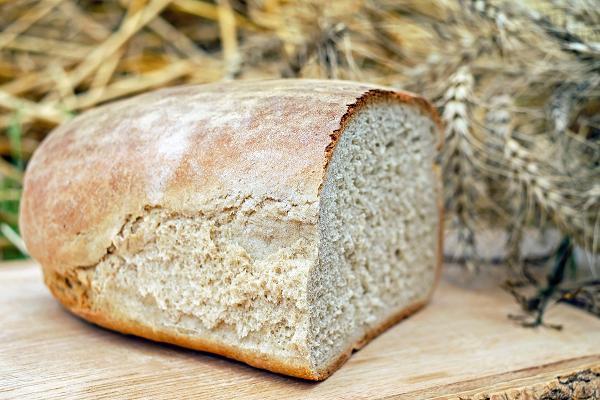
What you will find: displays covering advances in bread making over the past 6,000 years, the cultural and religious significance of bread, and a bread-oriented library of more than 6,000 books. The history of bread goes back over 12,000 years. And I assure you that when Germans perfected Bauernbrot - coarse rye farmhouse bread - it reached perfection itself.
What can you see in the museum?
First floor: grains and baking
The history of bread begins with grains. The museum covers this in detail on the first floor: how ancient peoples ground cereals to make flour, the difference between grains like maize, barley, millet, and buckwheat (not enough gluten for raised bread) versus wheat and rye (enough gluten to trap the CO2 needed to make dough rise).
That's also where flat breads come from - grains without enough gluten. Raised breads need leavens: natural ones like yeast or chemical ones like baking powder. The museum walks you through all of it.
Second floor: bread through the ages
The second floor deals with bread's role in civilization. Bread's only rival as a necessity of life is water - which is itself an ingredient of bread.
When there's no good harvest, in the wake of wars or natural disasters, there's soon no bread. People starve. As Jonathan Swift said in A Tale of a Tub: "Bread is the staff of life." Who could argue with that?
A significant art collection includes works by Markus Lupertz, Salvador Dali, Kathe Kollwitz, Pablo Picasso, Georg Flegel, Max Beckmann, Man Ray, and Ernst Barlach - all with magnificent representations of bread throughout the ages.
Bread in literature and history
"Give us this day our daily bread." Juvenal observed that Rome had deteriorated to "bread and circuses." Shakespeare wrote of "the bitter bread of banishment." Esau sold his inheritance for bread and stew. Marie Antoinette allegedly lost her life over the callous "Let them eat cake."
Bread was also a lifesaver in the literal sense. In ancient Egypt, physicians applied poultices of mouldy bread to infected wounds. In the early 17th century, wet bread was mixed with spider webs to treat wounds. The mould principle eventually led to penicillin.
| Detail | Info |
|---|---|
| Name | Museum Brot und Kunst |
| Address | Salzstadelgasse 10, 89073 Ulm |
| Phone | +49 731 69955 |
| Hours | Daily 10:00-17:00 |
| Adults | 4 euros |
| Reduced | 3 euros (children, seniors, students) |
| Collection | 18,000+ objects, 700 on permanent display |
| Library | 6,000+ books about bread |
There's a good chance your visit will inspire your appetite. If so: guten Appetit!
Frequently Asked Questions
Where is the Bread Museum in Germany?
The Museum Brot und Kunst is in Ulm, Baden-Wurttemberg, inside the historic Salzstadel (salt storehouse) on the northern edge of the Old City. The address is Salzstadelgasse 10, 89073 Ulm.
Why is bread important in German culture?
Germany has over 3,000 types of bread - more varieties than any other country. Bread is so central to German identity that the nation's bakery tradition was nominated for UNESCO cultural heritage status. Germans take their Brot seriously.
How many types of bread are there in Germany?
Over 3,000 registered varieties, ranging from dark rye Pumpernickel to light wheat Brotchen. The German bread register maintained by the German Bakers' Confederation keeps track of them all.
How much does the Bread Museum in Ulm cost?
Adults pay 4 euros. Children, seniors, students, and disabled visitors pay 3 euros. The museum is open daily from 10:00 to 17:00.