Faberge Museum Baden Baden
While the superb boutiquey Faberg' museum was established in Baden-Baden eight years ago (2009) to honor the renowned Russian jeweler Peter Carl Faberg', it houses much, much more than examples of...
While the superb boutiquey Faberg' museum was established in Baden-Baden eight years ago (2009) to honor the renowned Russian jeweler Peter Carl Faberg', it houses much, much more than examples of and information about Faberg's spectacular creations between 1885 and 1917 for Tsar Alexander III (1845-1894) and Tsar Nicholas II (1868-1917).' Of course, Faberg' is best known for his bespoke Easter eggs, but his artistic expertise extended well beyond those unique annual bespoke creations.
Various Works on Display
The museum also proudly includes some distinctive and unique works of 19th-century competitors and colleagues of Faberg', including Carl Edvard Bolin, who joined Andreas Roempler as a full partner upon marrying Roempler's daughter Ernestine Catherina.'' In the late 1900s, Faberg's creations eventually surpassed Bolin's in imagination, creativity, and popularity; Frederic Boucheron, whose mid-19th-century founding in Paris prompted Boucheron's spectacular creative successes in the early years, especially the corsage he created in 1878 for Russian Prince Felix Youssoupoff which led to Boucheron's establishing a branch in Moscow in 1893.' The Youssoupoff corsage included six detachable diamond bows; Louis-Fran'ois Cartier, who held his first exhibition and sale at the Grand Hotel Europe in Saint Petersburg in 1907.' Shortly thereafter, Tsar Nicholas II appointed Cartier an official purveyor to the House of Romanov;' Pavel Akimovich Ovchinnikov, who founded his firm in Moscow in 1853.' Ovchinnikov, preceding Faberg' by almost 20 years, was named a purveyor to the Tsar's court in 1868.' Ovchinnikov combined traditional shapes with cloisonn' enamel and with the then-modern shaded-enamel technique in which colors and tints were blended naturalistically, with no metal separating the colors; Ignaty Sazikov, established as a court supplier by the Tsar in 1846, specialized as a silversmith and his works included silverware, cast silver, and cloisonn' enameled silver pieces.' Of particular interest is the magnificent 27-piece Sazikov punch set, created in 1874-75 by command of Tsar Alexander III and weighing 12.45 kilograms; Ivan Khlebnikov bought the Sazikov firm from his heirs in 1887.' Khlebnikov was a world-renowned specialist in enameled silver as well as in silver chasing, trompe-l'oeil imitative castings, and cloisonn' and plique-'-jour enameling.
The most popular features of the Faberg' collection
Among the most popular features of the Faberg' collection, be sure to see the chameleon fashioned in bowenite, a pale-green, semi-precious stone traditionally identified with the M?ori of New Zealand, who used it for tools, weapons, and jewelry.' This unique piece once belonged to King George V of Greece.' The chameleon's eyes are delicate Siberian rubies ringed with gold.' The collection also includes a marvelously detailed rabbit family with a large doe and six kits.' All are in silver with inset eyes of rubies.' In addition, there is a beautiful horse-race trophy, a cloisonn' cup created by Faberg' in 1911 on behalf of Tsar Nicholas II for the World Exhibition in Rome.' It is primarily turquoise-colored enamel and gilt on silver.' Be on the lookout also for a brooch designed specifically for Tsarina Alexandra in 1913 (part of a larger brooch collection).' It is the imperial Russian eagle in full wingspread fashioned of gold and platinum with numerous diamond and ruby accents.' There is a late-19th-century figure of Buddha created by Faberg' from bowenite, gold, brilliant-cut diamonds, Siberian rubies, and Guilloche-Emaille, i.e., a mechanical technique employed to apply a delicate, meticulous, elaborate, and duplicative design on a metal base.' Faberg' perfected this technique with his bespoke Easter Eggs and applied it as he deemed appropriate to other creations as the opportunity arose.' A lovely Guilloche-Emaille, gilded desk clock of silver from the early 20th century (after 1903) fashioned by one of Faberg's chief workmasters, Henrik Immanuel Wigstr'm, under Faberg's aegis.' There is a small stemmed bowl created by Michael Evlampievich Perchin, perhaps Faberg's premier workmaster until replaced by Wigstr'm following Perchin's death in 1903.' The bowl incorporates topaz, gold, diamonds, and enamel in its formation with a snake winding around the stem from its base to beneath the bowl proper.' One of the most significant collections within the overall Faberg' collection is that of the more than two dozen brooches commemorating the 300th anniversary of the Romanov dynasty (1613-1913) fashioned of amethysts, rose-colored diamonds, brilliant diamonds, and gold.
The Faberg' egg in the Collection
The museum comprises more than 700 items whose display are rotated regularly on a so-called mix-and-match basis and includes a regrettably unfinished Easter Egg with the working title Blue Constellation Easter Egg made for the Tsarina Alexandra in 1917, but never presented due to the Communist Revolution.' There is also an extensive assortment of luxurious cigarette cases with humorous animal miniatures in precious and semi-precious stones.' The collection is a superb representation of the abundant wealth that furthered the artistic creativity and imaginations of jewelers, goldsmiths, silversmiths, and associated artisans from the mid 19th century to the very early 20th century.
Directions and opening Hours
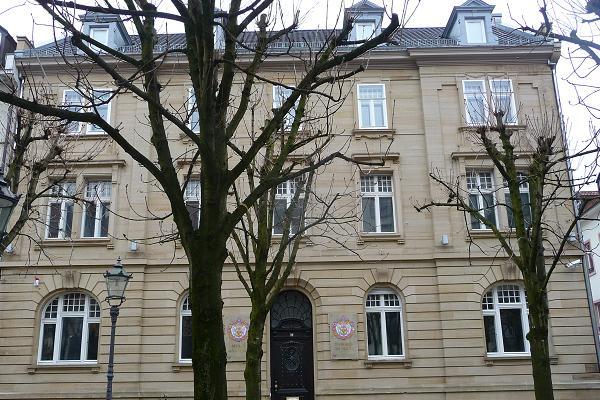
The museum is at Sophienstra'e 30 in Baden-Baden, between Stephanienstra'e and Vincentistra'e, where Sophienstra'e bears off north as an undivided side street.' Sophienstra'e is a wide shopping boulevard, commencing at Leopoldsplatz, with a wide, tree-rich landscaped median strip that enhances the charm of the area.' The museum's normal hours are from 1000 until 1800 daily; however, it's closed on both Christmas Eve and New Year's Eve.' The telephone is 49 (0) 7221 970890'call ahead to confirm the hours and to ask the time of the next exhibition change.
Frequently Asked Questions
Is the Faberge Museum in Baden-Baden worth visiting?
Yes - it houses over 1,500 pieces including original Faberge eggs, and it's the largest collection of its kind outside Russia.