Does Smelling Farts Help With Learning German
Have you ever heard of 'learner types' or 'learning styles'? No? Lucky you. Oops, now you have, my bad. The unfortunate idea behind this myth is that people learn differently based on biological...
Have you ever heard of 'learner types' or 'learning styles'? No? Lucky you. Oops, now you have, my bad. The unfortunate idea behind this myth is that people learn differently based on biological predispositions'ring any bells?
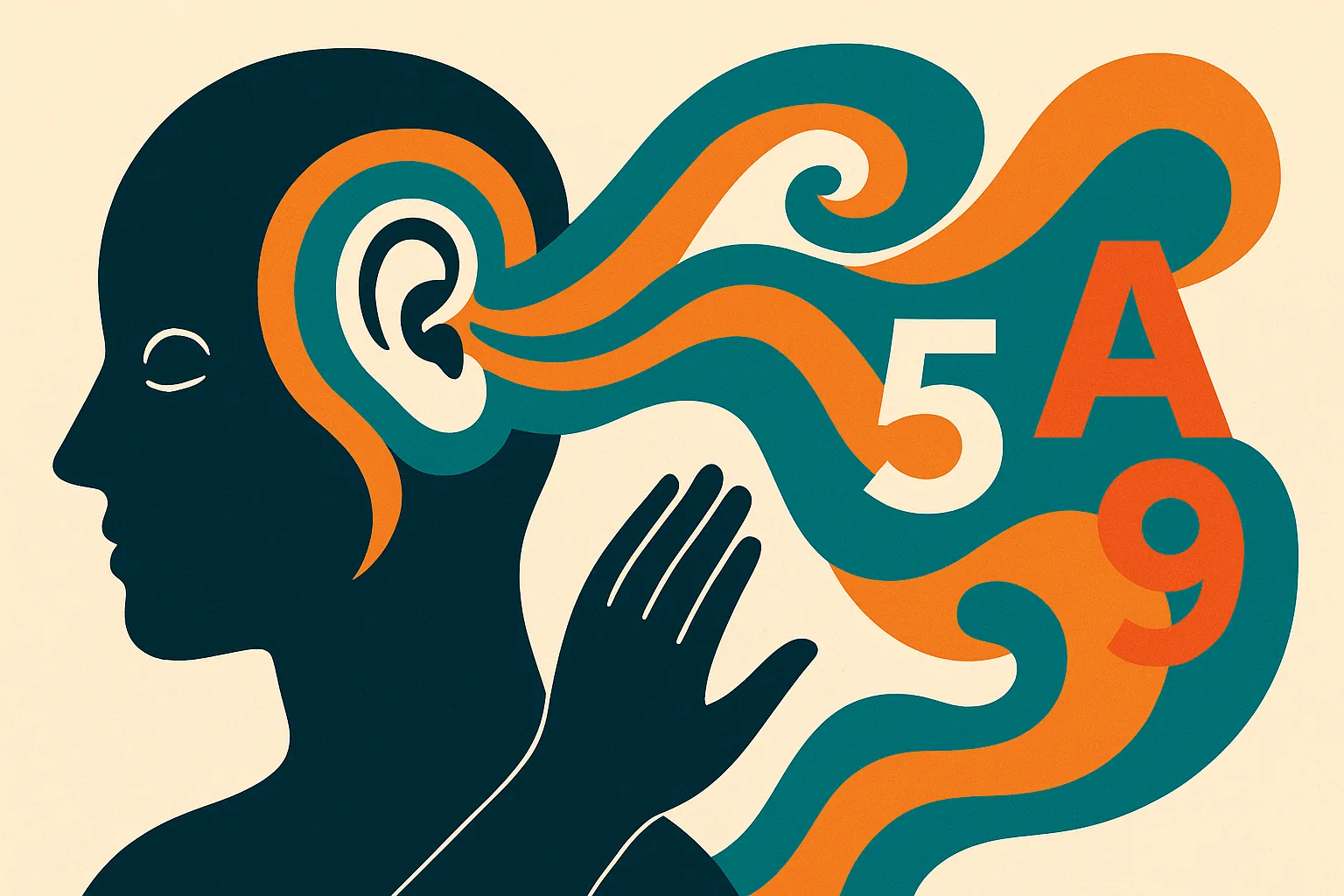
We're are of course talking about visual ??, auditory ??, kinesthetic ? (this is where the p3n1s comes in), olfactory ?, verbal ?, logical ??, social ?, solitary ?, naturalistic ? etc. "types" of learners. All of these were invented by imaginative minds with zero connection to empirical reality. None. I know that's hard to swallow'I believed it myself for years, until I dove into the actual science and started asking just one more question: if this was true, what would that actually mean in practice?
And it turns out that it's simply impossible to create materials that are exlusively visual, auditory or even kinesthetic. All materials are always triggering several senses. And just looking at images will not help you learn German at all. You need to read, listen, write, speak and understand and that always requires all senses and no, you don't have to smell things to remember them better. Sure, that might help but it's simply not necessary as you have surely already smelled one and can make use of your memory without exposing yourself to another existential crisis.
I totally get why the idea is appealing. It offers a comforting illusion of control over something that is, by nature, hard: learning. But in the end, this view on the learner mostly serves as an excuse for poor outcomes. If you don't succeed, it's not you'it's because you're a kinaesthetic learner, and the course you tried wasn't 'movement-based' enough. Great. Grab your unicycle and your juggling balls, and go memorize your dative prepositions: aus, bei, mit, nach, seit, von, zu, außer, gegenüber, ab. I'm not saying that a unicycle couldn't be beneficial for your German grammar. Au contraire.
Unfortunately'or rather, fortunately'there's no scientific foundation for this theory. Multiple large-scale studies have debunked the idea that teaching according to one's preferred 'learning style' improves learning results. What actually works? Effective instruction that doesn't get lost in wishful thinking. Structured repetition. Context. Honest feedback. Not whether you use paper flashcards or a flashcard app. And yes, dancing the alphabet might be fun'but it doesn't beat saying it out loud a dozen times until it sticks. If you prefer to dance it, totally up to you. If time is of the essence, there are better approaches to achieve the same.
Sure, you may have preferences. You might like watching videos more than reading, or find audiobooks soothing. That's of course fine. Feel free to binge German content that makes you happy. But please don't confuse enjoyment with effectiveness. If you're aiming for real results, don't worry about your 'style.' Worry about consistency. Structure. Progress'even when it's uncomfortable. That's where the learning lives.
So yes'you can learn German with or without a penis, a mood board, or a learning preference. What you can't do is shortcut the work. The path to fluency doesn't care what type you think you are.
And you might struggle a bit with me for being so straightforward which is why I recommend you soothen your pain with one of my favorite youtubers who says it way more nicely than I just did: Veritassium.
Unfortunately, this is such a stubborn myth that even highly qualified and experienced German teachers still buy into it today. But not only is the idea of learner types pure phantasy, it can also very harmful to students and teachers alike because not only do you set yourself up for failure when trying to design classes under such a premise, you also waste a lot of time prepareing and working with material which in the end might simply be insufficient for what you are trying to achieve.
Therefore my two cents: if a German tutor claims they offer lessons tailored to their students' learner types: run. Or simply share this post with them so that they too can get desillusioned like I did many years ago.
Resources
I'm a big fan of real science, sorry Bobbie:
- For starters: Wikipedia - go right to critcism, will save you precious time
- Coffield, F., Moseley, D., Hall, E., & Ecclestone, K. (2004). Learning styles and pedagogy in post-16 learning: A systematic and critical review. Learning and Skills Research Centre. READ HERE.
- Pashler, H., McDaniel, M., Rohrer, D., & Bjork, R. (2008). Learning styles: Concepts and evidence. Psychological Science in the Public Interest, 9(3), 105'119. READ HERE.
- Rogowsky, B. A., Calhoun, B. M., & Tallal, P. (2015). Matching learning style to instructional method: Effects on comprehension. Journal of Educational Psychology, 107(1), 64'78. READ HERE.
- Kirschner, P. A. (2017). Stop propagating the learning styles myth. Computers & Education, 106, 166'171. READ HERE.
- Newton, P. M., & Miah, M. (2017). Evidence-based higher education ' Is the learning styles 'myth' important? Frontiers in Psychology, 8, 444. READ HERE.
- http://www.danielwillingham.com/learning-styles-faq.html
Some easier to read sources:
- https://www.theatlantic.com/science/archive/2018/04/the-myth-of-learning-styles/557687/
- http://www.danielwillingham.com/learning-styles-faq.html
- https://www.apa.org/news/press/releases/2019/05/learning-styles-myth
- https://universityobserver.ie/learning-styles-educations-most-popular-neuromyth/
That should do for the beginning, right?
Frequently Asked Questions
Does smelling farts help with learning German?
No. But the clickbait title did get you here, and the article actually discusses how humor and surprise can improve memory retention.