Christmas In Germany
There are a few similarities between American traditions, at the least, and German traditions for Christmas. However, even though in both the United States and in Germany Christmas is a commercial...
There are a few similarities between American traditions, at the least, and German traditions for Christmas. However, even though in both the United States and in Germany Christmas is a commercial season, the season looks a bit different in Germany!
'' '
When I grew up (in the US), we had a glass pickle ornament on our Christmas tree, and we were told it was because of an old German tradition. As my family could easily trace their ancestry back only a generation or two from Germany, they took it to be fact.
'' '
Unfortunately, while these glass ornaments are often made in Germany (as are many glass ornaments for Christmas), the pickle ornament has never been a tradition in Germany by natives.
The Christmas tree, however, is!
While evergreen plants have been used to represent life eternal in human imagination for centuries, the tradition of the Christmas tree (Tannenbaum) has been carried over from Germany to other parts of Europe and also the Americas. It is said that during the Christianization of the Germanic tribes, St Boniface used the connection between renewal and everlasting life to dedicate the fir tree (Tannenbaum) to the Christ Child, which eventually displaced the oak tree which had been sacred to Odin. However, we can trace the use of the Tannenbaum' - raising it in rooms and decorating it ' to around the 1550s due to looking at carols from the time.
Christmas markets
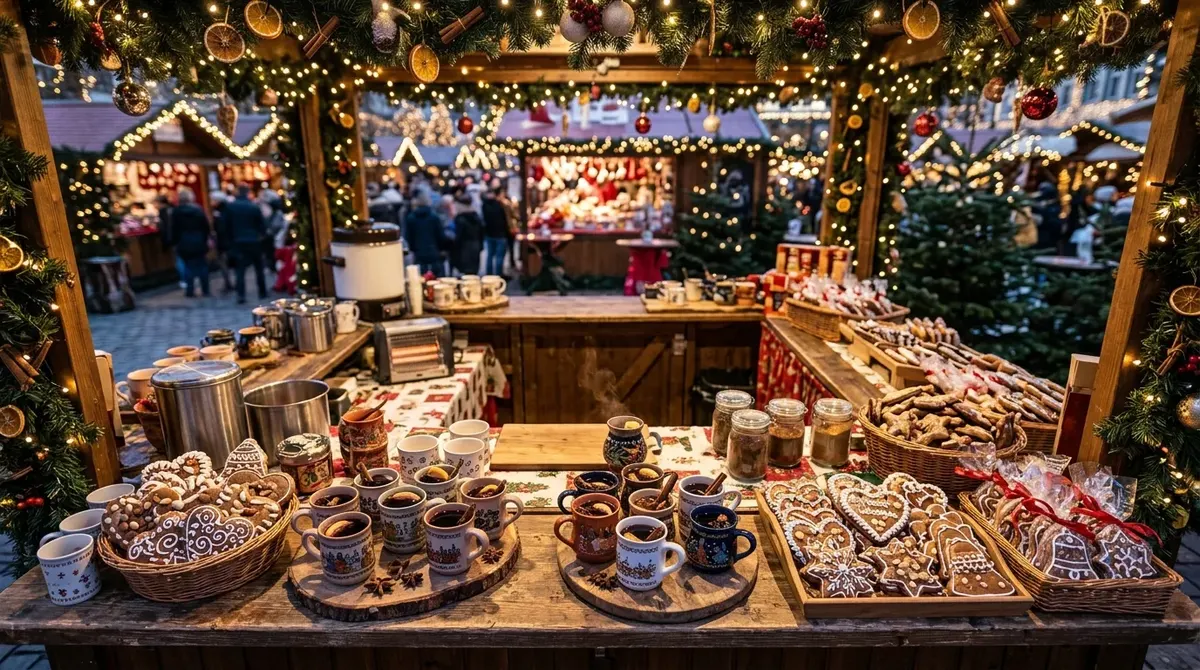
Germany has other major traditions for Christmas too, though, that sometimes we do not see as easily in the United States. The tradition of the Christmas market (Weihnachtmarkt; also known by other names) in Germany stemmed from winter markets to help people get through the cold winter months, and nowadays any town of moderate size in Germany will boast at least one of these markets. In the United States we only see these markets in larger cities, especially the cities that have a large German-American population; I do see them in other cities in Europe however, such as in Guildford, in England. These markets generally start when Advent starts (though some start as early as late November!) and run for about three to four weeks. You can buy food at these markets, too ' everything from currywurst to cookies to cider. These markets can be found in other places across Europe, but the market in Dresden has the strongest claim for being the oldest Christmas market (1434) as far as we can tell!
The Christmas season
As stated, this means Christmas has a lot of commercialism to it, but instead of going to big stores, it has a bit more local flavor in Germany. Christmas itself is its own season, with German traditions incorporating Advent (the four weeks before Christmas Day) as well as 'the twelve days of Christmas' between December 25th and January 6th ' that is, between Christmas Day and Epiphany, the day in which the three wise men are supposed to come from the east to visit the newly born Christ child (as per the gospel of Luke in Christian scripture). While the gift-giving date has changed over the years from the festival of St Nicholas himself (December 6-7) to Epiphany (January 6th) to the more common Christmas Eve (Germans don't tend to open presents on Christmas Day!), the idea of Christmas as an anticipated, joyous season to combat the dreary, cold days of winter has a long history in Germany.
'' '
What's your favorite part of Christmas ' or do you not celebrate Christmas at all? Let us know!
Frequently Asked Questions
When do Germans celebrate Christmas?
On the evening of December 24th (Heiligabend) - presents are opened that night, not on Christmas morning.