Bakeries Germany Backwaren
When you ask German expats what they are missing most since they have left their country, they will sooner or later mention bread.
When you ask German expats what they are missing most since they have left their country, they will sooner or later mention bread.
Germans tend to have a special relationship not only to bread but baked goods in general. When visiting Germany, you will soon realize that there are bakeries all over the place, from big franchise chains to a family-owned business in a small town.
What makes German bakeries special?
In 2014, UNESCO acknowledged German bread culture as intangible cultural heritage. Time-honored traditions persist, ensuring the preservation of a broad range of high-quality bread.
The Central Association of the German Bakery Trade estimates that there are 3,200 different types, not to mention the various styles of bread rolls. Over 1,200 types of Brötchen are known, but nobody can accurately prove it because the best bakeries have their own style and recipe for their fresh rolls.
The typical style of German bread is usually dark whereas the ordinary roll is light, but there are of course many exceptions. You will also find many styles from other countries or cultures in German bakeries such as French Baguettes, Italian Ciabatta or Turkish Flatbread.
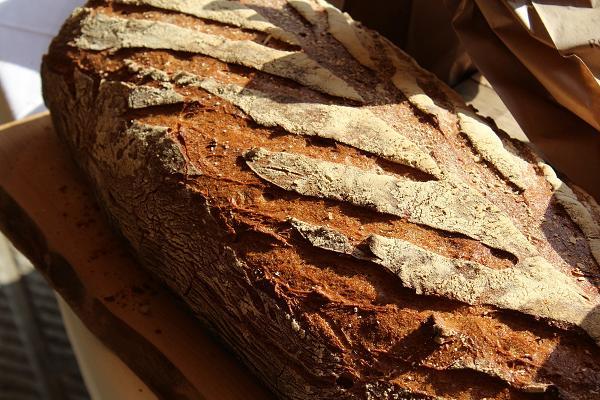
For Germans, real bread has to have a brown crust and a soft, brown or gray crumb. This kind of bread called Graubrot is like the holy grail of German bread culture. You will find it in many different varieties, but all of them have in common that they are dense and very satisfying.
It is also one of three ingredients to the basic lunch and great sandwiches that probably every German child has had in his or her lunchbox, the Butterbrot: bread, butter, and a topping like cheese or Wurst.
What types of bread do Germans eat?
Germans use almost all available types of grain for their loaves: wheat, rye, barley, spelt, oats and millet.
German bread tends to be heavy and healthy. That's why you can often find whole grains inside it or even on top of the crust. Many varieties refer to the used kind of seed.
There is Kürbiskernbrot (bread with pumpkin seeds), Haferbrot (bread with oats), Dinkelvollkornbrot (bread with whole seeds of spelt) and so on and so on. You can also find this with rolls: there are some with poppy seeds on or in it, with sesame, with nuts, with carrots or just different types of flour.
A special one is the Weltmeisterbrötchen ("world champion bread roll") with a bottom covered with whole grains. But there are also just the "regular" ones you can compare with a Baguette, just smaller.
It comes in two basic variants: The Kaiserbrötchen is round and more like a bun and the "normal" one which is longish and has different names, depending on the region. For example, Berliners call them Schrippen, Bavarians Semmel, Franconians Weck or Kipf, in northern Germany, they are often called Rundstück.
Germany does not have a tradition of sandwich shops, but many bakeries will do the job as well. Almost all of them are also selling prepared sandwiches with cheese or sliced meat or also regional specialties like Leberkäs in the south of the country.
What about pretzels and pastries?
A pretzel, also known as Brezel, is a baked pastry crafted from dough, traditionally formed into a knot. The plain ones are usually seasoned with salt but you can find an array of toppings, including mustard, cheeses, sugar, chocolate, cinnamon, sweet glazing, seeds, and nuts.
While often overshadowed by the desserts of neighboring countries like Austria, France, and Italy, Germany boasts a delightful array of pastries and desserts. Among the most popular is the iconic Schwarzwälder Kirschtorte (Black Forest Cake). Apfelstrudel is beloved throughout Germany, especially in Bavaria. Spaghettieis, a creation originating in Mannheim, combines ice cream "noodles," whipped cream, strawberry sauce, and white chocolate shavings. And German cheesecake is made with Quark, a dairy product that makes for a thicker consistency than yogurt but not as dense or sweet as cream cheese.
From simple soft pretzels at train stations to rolls with sesame seeds at a family-owned pastry shop, you can find a diverse selection of baked goods, including croissants with jam, white rolls with chocolate chips, and wholesome whole grain rolls adorned with sesame and sunflower seeds.
In some pastry shops you can also get a cup of tea, coffee, or some juice to enjoy with your breakfast or sweet treat.
Frequently Asked Questions
What are German bakeries called?
A Bäckerei. For pastries and cakes specifically, look for a Konditorei.
Why is German bread so different?
It's dark, dense, and heavy compared to most other countries. Germans use a lot of rye and whole grains, and the crust is supposed to be thick and brown.